
By Daniel Villarreal
The mark of a good teacher is to get their students to question life around them. In Suki Kim’s case, this proved to be no easy task. This was because she lived her life in disguise as an English teacher in North Korea six months before Kim Jong-il’s death.

Kim did this because she is an investigative journalist that wanted to uncover how life truly was in North Korea. It was a risky endeavor because if she overstepped the boundaries of the country’s regime, then her life could have been put in jeopardy. Kim described her investigation at a TED conference in Vancouver, British Columbia in March 2015.
Kim found that her students of North Korean elite lived lives that were shaped by the propaganda of their nation. She was not allowed to speak about her vastly different life that existed outside of North Korea. This was challenging when she taught her lessons because their lives were based on lies that were taught from an early age.
“North Korea is a gulag posing as a nation,” she stated. “Everything there is about the Great Leader. Every book, every newspaper article, every song, every TV program.”
Kim wanted to know how her students genuinely felt about living in North Korea, so she gave them an assignment to write letters to people of their choosing. “They wrote that they were fed up with the sameness of everything. They were worried about their future. In those letters, they rarely ever mentioned their Great Leader,” she said.
Gabrielle Razo, 24, spoke to how brave Kim was living undercover in North Korea. “We’re not able to know what’s going on over there, but she was able to go there and tell us what it’s like,” she said.
“She might have seen it as, ‘I have to do this, these are my people, they’re being tortured,’” Razo stated. “It’s very brave.”
Dora Villarreal of Chicago also talked about Kim’s bravery in immersing herself in the country. “I wouldn’t feel good doing what she did because I would be scared,” she stated. “But there’s nothing bad with trying to find out, she did the right thing.”
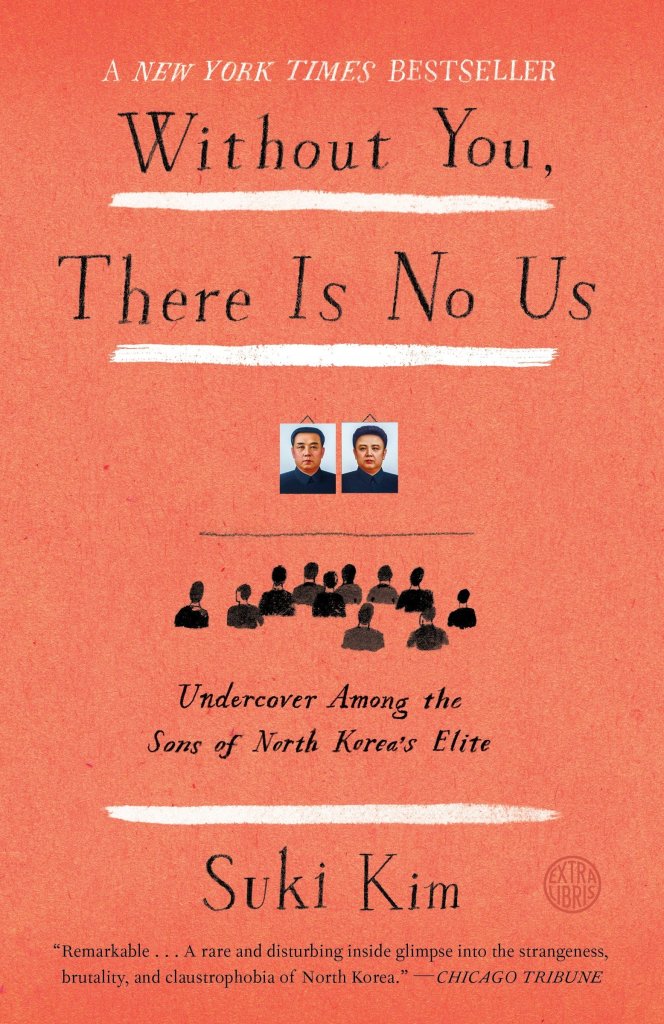
In an article for Slate, Kim wrote more about the difficulties of teaching her students how to write essays. Most of her students’ writings were based on the inaccuracies of how they were meant to view their country, their leader and the world.
“The nationalism that had been instilled in them for so many generations had produced a citizenry whose ego was so fragile that they refused to acknowledge the rest of the world,” Kim wrote. “To correct my students on each bit of misinformation was taxing and sometimes meant straying into dangerous territory.”
The precarious balancing act of showing her students distinct ways of thinking while still investigating their lives was shortened when Kim Jong-il died in December 2011. She then had to leave the country.
With little chance of reaching them, Kim wrote a letter to her students in her TED speech. She responded to her pupils’ desire to confirm the beauty of Pyeongchang, the capital of North Korea, in relation to other capitals she may have seen around the world.
“I don’t find your capital beautiful. Not because it’s monotone and concrete but because of what it symbolizes: a monster that feeds off the rest of the country, where citizens are soldiers and slaves,” she said. “And I hope instead that you, my lovely young gentlemen, will one day help make it beautiful.”
Article written for a journalism course at University of Illinois at Urbana-Champaign
 Daniel Villarreal